Thinking about buying a rental in Lakewood? You are looking at a market with real demand drivers, but the numbers only work when you underwrite each property carefully. Lakewood offers a mix of housing types, strong commuter appeal, and transit access that can support long-term rentals, especially if you match the property to the likely renter. In this guide, you will learn the key fundamentals to evaluate Lakewood rental properties with more confidence. Let’s dive in.
Why Lakewood draws rental demand
Lakewood is one of the larger west-metro cities, with 155,984 residents and 70,596 housing units counted in the 2020 Census. The city estimates that number is now closer to 73,000 units as of early 2024. It also has a mixed housing stock and a renter market that is large enough to offer more than one investment path.
Location is one of Lakewood’s biggest advantages. City planning data shows that about 81% of residents commute out of Lakewood for work, and around 40% of those commuters go to Denver. At the same time, about 28% of residents work from home, which means many renters may value both commute options and comfortable living space.
Transportation and access also help support demand. RTD’s W Line runs 12.1 miles from Union Station to Jefferson County Government Center, and Lakewood is also served by RTD bus routes and the West Rail Line. For many renters, that combination of suburban space and regional access is a major draw.
Lifestyle factors matter too. Lakewood says it has 114 parks and more than 7,400 acres of open space, including Bear Creek Lake Park. The city also points to parks, views, access to the mountains, and lower housing costs than some nearby markets as reasons newer market-rate demand has grown.
Start with the right property type
One of the most important investing fundamentals is picking a property type that fits the local renter base. In Lakewood, renter households skew smaller, which can shape what performs well. According to the city’s housing plan, 41.8% of renter households are one-person households and 34.9% are two-person households.
That makes smaller units a practical place to start. Studios, one-bedroom, and two-bedroom apartments, condos, and townhomes can line up well with the household sizes already common in the market. If you are a newer investor, these property types may also be simpler to model than a larger detached home with more maintenance variables.
Lakewood’s housing mix gives you several options. The city reports that housing stock includes 47.2% detached single-family homes, 10.7% attached single-family homes, 6.5% two-to-four-unit buildings, 10.2% five-to-nine-unit buildings, 9.2% ten-to-nineteen-unit buildings, 14.7% buildings with 20 or more units, and 1.5% mobile homes. That mix can support different strategies, from condo rentals to duplex-style opportunities to detached homes.
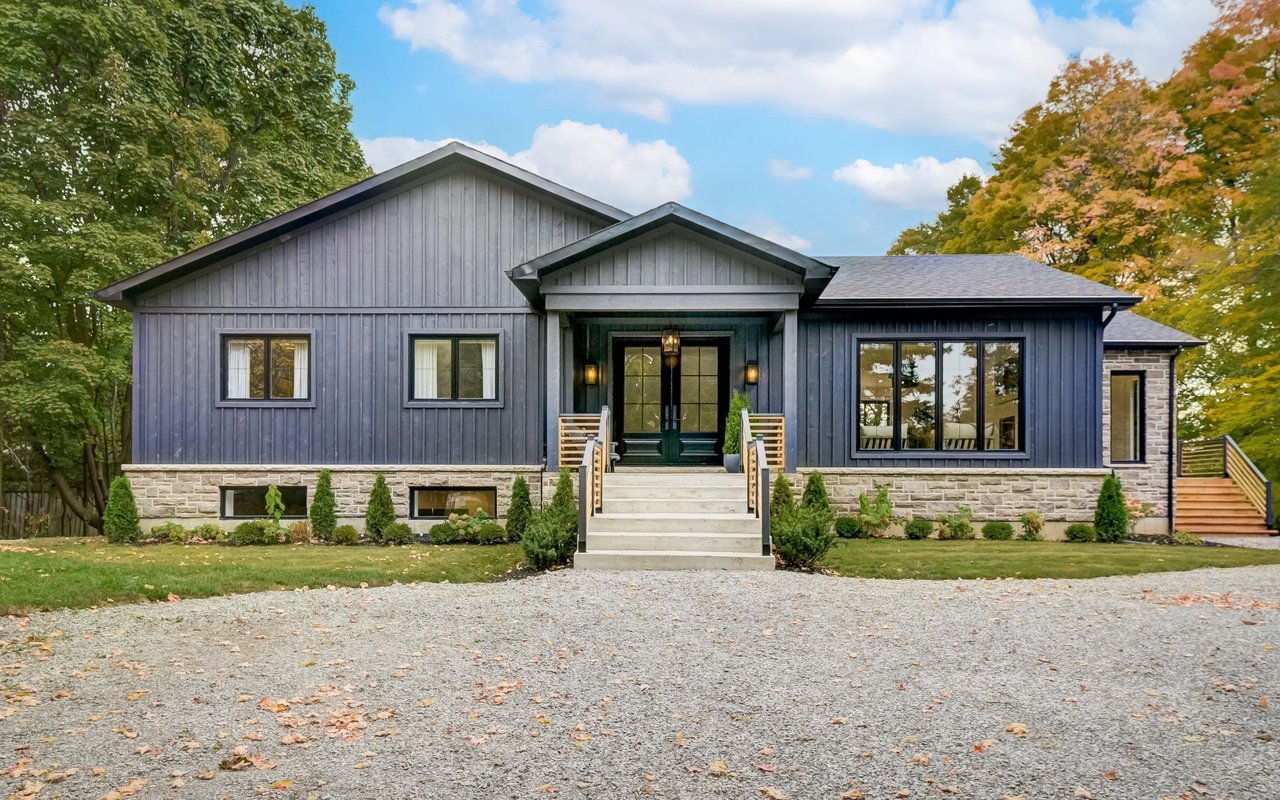
Detached rentals can still work well in Lakewood, especially for tenants who want more space, a garage, or a yard. But older detached homes often need a larger repair and turnover reserve than newer attached product. In Lakewood, that matters because about 18% of the housing stock predates 1960, with older homes concentrated in north and central parts of the city.
Focus on demand corridors
If you are screening for long-term rental demand, transit-oriented areas deserve attention. Lakewood planning materials show that recent residential permits since 2017 have been heavily multifamily and concentrated in Molholm/Two Creeks, Eiber, and Northeast Lakewood along the West Colfax corridor. That does not guarantee a good deal, but it does tell you where newer housing activity has clustered.
The West Colfax corridor is especially worth watching if you want to target renters who value rail access and a more connected location. The city also notes that 40 West Arts is a certified creative district in northeast Lakewood along historic West Colfax. For an investor, that kind of corridor can offer a different renter profile than a purely detached suburban pocket.
That said, no area should be judged by a headline alone. A rental property still has to work at the address level based on its price, condition, taxes, utilities, and likely rent. Neighborhood appeal can support demand, but it cannot fix weak underwriting.
Build your rent assumptions carefully
A common mistake is using one broad rent number for the whole city. Lakewood is too varied for that approach. You will get a better result if you compare the specific unit type, size, and location to realistic rent benchmarks.
Lakewood’s housing plan includes 2023 HUD small-area fair market rent estimates for local ZIP codes. Those ranges were $1,215 to $1,370 for efficiencies, $1,340 to $1,520 for one-bedroom units, $1,620 to $1,830 for two-bedroom units, $2,145 to $2,410 for three-bedroom units, and $2,410 to $2,710 for four-bedroom units.
These figures are useful as screening benchmarks, not final pricing. A renovated condo near transit may rent differently than an older unit farther from major access routes. Likewise, a detached home with outdoor space may appeal to a different renter than a one-bedroom near the rail line.
Competition at the lower end of the market also matters. The city estimates a deficit of about 6,300 rental units below $875 gross rent. That helps explain why lower-rent units can see strong competition, but investors should still be cautious and avoid assuming every lower-priced property will produce easy cash flow.
Underwrite from rent to NOI
Strong investing is usually more about process than hype. A clean underwriting model starts with gross scheduled rent, then moves to effective gross income, operating expenses, net operating income, and finally debt service. This basic sequence helps you see whether a property works before financing assumptions hide the real picture.
Here is a practical Lakewood underwriting workflow using public data:
- Confirm realistic market rent for the unit type and location.
- Estimate vacancy conservatively.
- Pull the parcel-specific property tax estimate.
- Confirm the water and sewer provider for the address.
- Estimate waste-hauling costs.
- Add repairs, maintenance, insurance, management, and HOA dues if any.
- Calculate NOI before debt service.
- Test the deal again with your financing terms.
This approach is especially important in Lakewood because costs can vary a lot from one property to another. Taxes, utility service, and repair risk are not uniform across the city. Two properties with similar asking prices can perform very differently once you model the real expenses.
Use parcel-level property tax numbers
Property taxes should never be guessed from a citywide average. Jefferson County explains that Colorado property taxes are based on actual value, assessment rate, and mill levy. For tax year 2025 payable in 2026, residential property is assessed at 7.05% for school district taxes and 6.25% for other local government taxes.
The key issue for investors is that mill levies vary by parcel. That means you should use the county assessor or treasurer estimate for the exact property you are analyzing. Even a strong rent estimate can be thrown off by a weak tax assumption.
Verify utilities before you buy
Utilities can quietly change your returns, especially if you are buying an older property or one with irrigation needs. Lakewood publishes a water and sewer provider list because many districts serve the city. That alone tells you not to assume every property has the same utility structure.
For city utility customers, Lakewood says utility rates are set by City Council, and owners are responsible for the line from the meter pit to the building. That can become important when you are evaluating maintenance risk. If you are buying an older home, utility infrastructure should be part of your due diligence.
Trash service is also not city-contracted in the usual sense. Lakewood says residents and property managers set up waste service directly with licensed haulers. You should treat that as a property-level operating cost and confirm how service will be handled before closing.
Water use can matter more than many first-time investors expect. In semi-arid Colorado, irrigation-heavy properties may carry higher operating costs. A large yard may sound attractive, but it can also reduce cash flow if your expense model is too light.
Know the Colorado rental rules that affect cash flow
Legal compliance is part of underwriting. In Colorado, a landlord generally must return a security deposit within one month after lease end or surrender, unless the lease extends that deadline up to 60 days. A landlord also cannot keep a deposit for normal wear and tear.
Colorado’s renters-rights summary also notes that a landlord can face treble damages for wrongful withholding of a security deposit. In addition, a landlord generally cannot require more than two monthly rent payments as a security deposit, and cannot require a pet deposit above $300. These rules can affect both your lease structure and your risk management.
Habitability matters as well. Colorado’s warranty of habitability requires residential premises to remain fit for human habitation. If you are analyzing an older property, deferred maintenance is not just a repair issue. It can become a compliance issue.
Fair housing compliance is essential too. Lakewood’s fair housing page reminds landlords that federal and state anti-discrimination rules apply. For any rental strategy, clear screening standards and consistent processes are important.
Do not confuse long-term rentals with short-term rentals
Some investors look at short-term rentals as a backup strategy, but in Lakewood that is a separate business model. The city requires a short-term rental license, proof of primary residence, $500,000 in liability coverage, an inspection, community notice, and a fee. That is very different from a standard long-term buy-and-hold approach.
If your goal is passive long-term rental income, do not underwrite the property as though short-term rental income is your safety net. In Lakewood, the rules make that a distinct path with its own costs and limitations.
What a conservative Lakewood deal looks like
A solid Lakewood rental deal usually combines realistic rent, address-specific expenses, and a property type that fits local demand. In many cases, that means a smaller attached property or well-located multifamily-style unit that aligns with the city’s large share of one-person and two-person renter households. It can also mean a detached home, but only if the reserves and maintenance outlook make sense.
You should also pay attention to age and infrastructure. Older stock may offer value-add potential, but it can bring more repair uncertainty. Newer or updated properties may have a lower maintenance profile, even if the purchase price is higher.
Most of all, let the numbers lead. Lakewood has strong demand drivers, including Denver access, transit service, parks, and a broad housing mix. But good investing still comes down to buying the right property at the right basis with a realistic expense model.
If you are exploring Lakewood rental properties, the right guidance can save you time and help you focus on addresses that fit your goals. Nino Pepper offers investor education, buy-and-hold guidance, and portfolio-focused support across the Denver metro, with modern tools that make local and remote investing more efficient.
FAQs
What makes Lakewood appealing for rental property investors?
- Lakewood offers strong location-based demand drivers, including access to Denver, W Line transit service, parks and open space, and a housing mix that supports several long-term rental strategies.
What property types fit Lakewood renter demand best?
- Because many Lakewood renter households are one-person or two-person households, studios, one-bedroom, and two-bedroom apartments, condos, and townhomes are often logical starting points.
What should you check before buying a Lakewood rental property?
- You should verify realistic rent, parcel-level property taxes, the water and sewer provider, waste-hauling costs, repair needs, insurance, any HOA dues, and whether the property’s condition supports habitability requirements.
How should you estimate property taxes for a Lakewood rental?
- You should use the specific parcel’s county tax estimate rather than a citywide average because Jefferson County property taxes depend on actual value, assessment rate, and mill levy, which can vary by property.
Are short-term rentals allowed in Lakewood?
- Yes, but they require a separate city license and additional requirements such as proof of primary residence, liability coverage, an inspection, community notice, and a fee, so they should not be treated like a standard long-term rental plan.